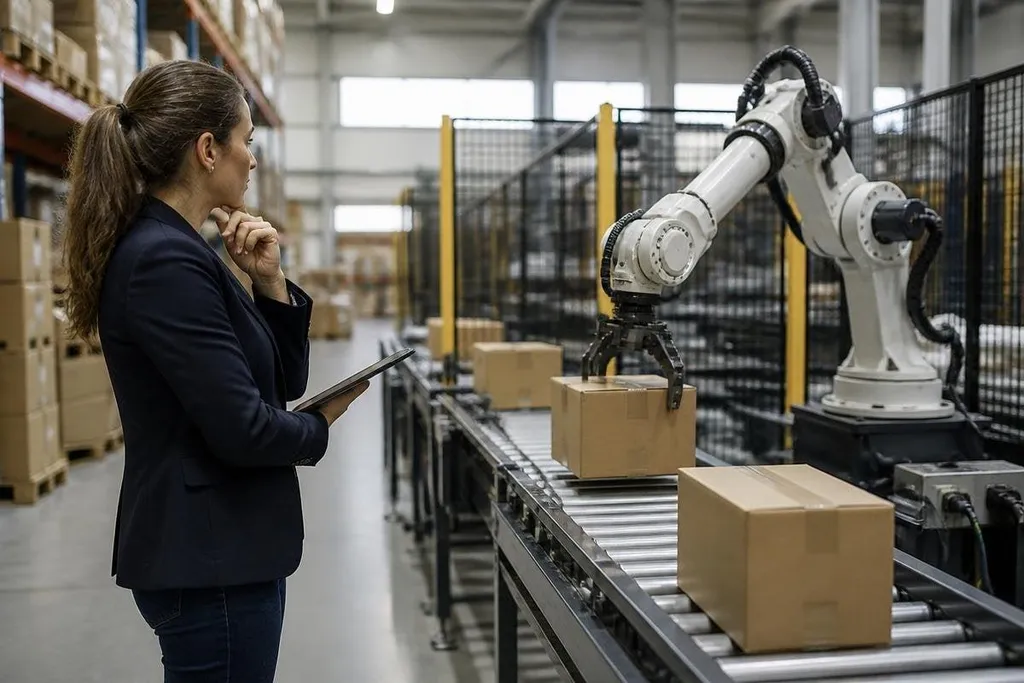
A robot tax sounds easy to explain: charge companies when machines take over work done by people. The hard part is deciding which machine counts, what the charge should fund, and how to avoid slowing useful automation.
Quick read:
- A tax on every industrial robot would catch machines that add output without removing a job.
- A levy tied to lost payroll tax would aim at a narrower problem.
- Any revenue should fund worker training, wage support, or local services where automation changes hiring.
The case for a robot tax
Companies pay taxes on wages through payroll systems. Machines do not receive a wage, so they do not create the same tax stream. That difference gives policymakers a reason to ask whether some forms of automation should carry a separate charge.
The argument gets stronger when a company removes a large group of paid roles and replaces the work with an autonomous system. A tax could help pay for training, job placement, or public services in the area affected. It could also make the cost of a machine easier to compare with the cost of hiring people.
That case depends on a clear link between the machine and the lost tax revenue. A machine moving parts inside a factory may let a company produce more goods without cutting its workforce. Charging that machine could punish investment that creates work elsewhere in the same facility.
Why a blanket charge would miss the point
The word “robot” covers too many machines for one flat tax. A vision-guided arm on an assembly line, a warehouse vehicle, and software that sorts invoices can all reduce manual work, but they change costs and hiring in different ways.
A broad charge would also create a boundary problem. If a machine counts as a robot, does a conveyor with sensors count? What about a machine supervised by one operator? A company could change the label or divide one system into smaller parts without changing the work it performs.
The useful line should follow the work a system performs and its effect on jobs, not the label on its box. Dated reports at Robot24.com can tie that debate to named machines, companies, and work sites before the charge is set.
Tie the charge to the effect
A workable policy would start with the task that changed. A company replacing 50 paid inspection roles with cameras and software presents a different case from a company adding a robot arm while keeping its inspection team.
That does not make the tax easy. Policymakers would need a way to compare the old work with the new system, record changes over time, and protect small firms from a large filing burden. The rules would also need to cover imported machines and software-based automation, or the charge would favor one form of automation over another.
One option is a temporary levy when a company cuts a defined number of roles after installing an autonomous system. Another is a payroll credit for companies that retrain affected staff. A third is a tax on the extra profit linked to automation, with the money sent to training and local services.
Each option has a cost. A job-based levy may be hard to prove. A payroll credit may reward companies that would have trained staff anyway. A profit tax may reach more firms, but it would be harder to connect the money to a specific machine.
Companies can prepare by recording the work done before installation and after the system runs. They should separate jobs removed from jobs changed, added, or moved to another site, then record who moved into a new role and how many training hours they received. The same record should separate lower labor cost from higher output, fewer defects, or safer working conditions.
That record gives a company a better answer when a regulator asks whether automation caused a staffing change. Without it, the debate becomes a guess based on the machine's name.
Before setting a rate
A government testing a robot tax should:
- Define the charge around removed or changed work, not the word “robot.”
- Exempt systems that add capacity while keeping the same paid roles, unless they meet a separate test.
- Set a review date so the rule can change when automation methods change.
- Publish where the money goes, with training and wage support listed separately.
- Test the rule on a small group of firms before applying it across an industry.
My view is that companies shouldn't pay a tax for owning a robot. They should pay only when a policy can show that automation removed taxable work and that the money will help people affected by that change.
The first useful step is a job record, not a new tax rate. Without that record, lawmakers would be taxing a machine category instead of measuring the work that changed.